


In recent months, headlines across the Buckeye State have left many families concerned: an ohio school board suspends high school operations, programs, or specific student groups. Whether it’s due to a sudden shift in state law, a looming budget deficit, or safety concerns, these decisions have a massive ripple effect on local communities.
If you are a parent or student in a district like Springfield, Cleveland, or Columbus, understanding the “why” behind these moves is essential. In this guide, we’ll break down the latest legislative changes, the financial pressures forcing school boards’ hands, and the legal rights you have when an ohio school board suspends high school activities.
Why an Ohio School Board Suspends High School Programs in 2026
When we hear that an ohio school board suspends high school programs, the cause is rarely a single event. Instead, it is often a “perfect storm” of administrative challenges. As of March 2026, several key factors are driving these difficult decisions across Ohio.
1. The Impact of Budget Deficits
In districts like Springfield City Schools and Cleveland Metropolitan School District (CMSD), financial sustainability has become the primary driver for program suspensions. When a district faces a multi-million dollar deficit, the school board often votes to suspend or close specialized high schools to save the “core” traditional schools.
SLTF Login & Sign Up: Educational Era for Ghanaian Students
For example, the Springfield School of Innovation was recently slated for closure to prevent a projected $10 million debt by 2030. When an ohio school board suspends high school options like this, it is often because the cost per student in specialized programs far exceeds the state funding provided.
2. Teacher and Staffing Shortages
Even with funding, you can’t run a school without educators. Many Ohio districts are struggling to staff STEM, Advanced Placement (AP), and vocational programs. When a board cannot find qualified instructors, they may be forced to suspend those specific high school courses indefinitely.
New State Laws: House Bill 206 and Indefinite Suspensions
One of the most significant changes for the 2025-2026 school year involves student discipline. Under Ohio House Bill 206, school boards now have expanded authority regarding student removals.
Understanding “Imminent and Severe Endangerment”
The law now allows a superintendent to suspend or expel a student indefinitely if their behavior is deemed an “imminent and severe endangerment” to others. This includes:
- Articulated threats on social media or in person.
- Bringing dangerous weapons to school grounds.
- Acts that would be considered serious felonies if committed by an adult.
The Role of Mental Health Assessments
When an ohio school board suspends high school students under HB 206, the student may not be allowed to return until they pass a mental health evaluation. If the student fails to meet the “rehabilitation” criteria set by the superintendent, the suspension can be extended in 90-day increments, potentially leading to a long-term removal from the traditional classroom.
How an Ohio School Board Suspends High School Extracurriculars
It isn’t just the classrooms that are affected. Often, an ohio school board suspends high school sports or clubs as a first line of cost-cutting.
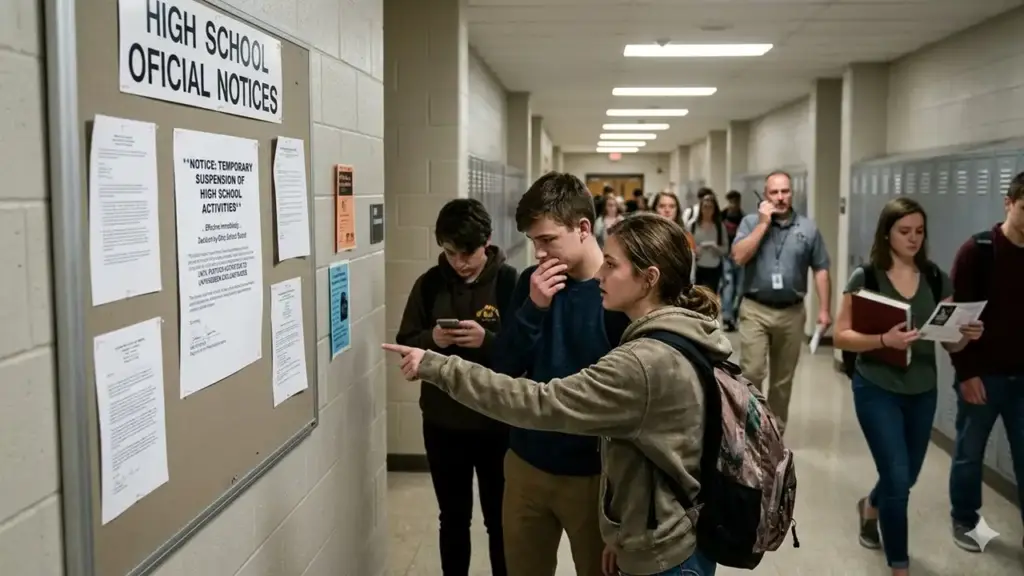
The “Pay-to-Participate” Model vs. Total Suspension
In some districts, boards have moved to suspend all non-essential extracurricular activities unless they are entirely self-funded by parents. This can lead to:
- Loss of Athletic Scholarships: Canceled seasons mean fewer eyes from college recruiters.
- Reduced Engagement: Students who thrive in band or theater may lose their primary motivation for attending school.
Important Note: If your district suspends a program, check if “Dual Enrollment” or “College Credit Plus” (CCP) options are available. These allow students to earn high school and college credits simultaneously, often at no cost to the family.
Your Rights: Due Process and Appeals
If an ohio school board suspends high school students or specific educational paths, families are not without recourse. Ohio law, backed by the landmark Goss v. Lopez Supreme Court case, ensures that students have a right to due process.
- Written Notice: You must receive a formal letter explaining the reason for the suspension.
- The Informal Hearing: Before a 10-day suspension is finalized, the student usually has the right to tell their side of the story to a principal.
- Appealing to the Board: For longer expulsions or program closures, parents can often request a formal hearing before the board of education.
Internal linking to your district’s specific “Student Code of Conduct” is a great way to stay informed about local policies.
Myklassroom Login & Revolutionary Social Learning Platform
Frequently Asked Questions (FAQ)
1. Can an Ohio school board suspend high school programs without a public vote?
Generally, no. Major changes to a district’s structure, such as closing a building or suspending a specific high school program, must be voted on during a public board meeting. However, “emergency removals” for safety can happen more quickly.
2. What happens to my credits if an ohio school board suspends high school operations?
If a school closes or a program is suspended, the district is legally required to provide a pathway for students to complete their graduation requirements, either through a different building in the district or an online alternative.
3. How long can a student be suspended in Ohio?
A standard out-of-school suspension lasts up to 10 school days. However, under new laws like HB 206, “expulsions” for severe threats can be extended indefinitely if certain mental health or safety conditions are not met.
4. Is there an alternative to out-of-school suspension?
Yes. Many districts are moving toward “Restorative Justice” or “In-School Suspension” (ISS) to keep students in a learning environment while they address behavioral issues.
Staying Proactive in Your District
When an ohio school board suspends high school programs or students, it creates a period of uncertainty for everyone involved.
Whether the cause is a lack of state funding or a need for stricter safety protocols, the best thing you can do is stay engaged. Attend your local school board meetings, review the updated 2026 discipline codes, and advocate for the programs that matter most to your student.


