


Whether you are a weekend angler, a shoreline homeowner, or a local vacationer, the health of Lake Anna is likely close to your heart. However, beneath the shimmering surface of this 13,000-acre reservoir, a silent battle is unfolding.
The rise of Anna Lake invasive species has become more than just a footnote in environmental reports; it is a primary concern for the local economy, property values, and the delicate balance of aquatic life.
As we move through 2026, new data and management protocols are shifting the way we interact with the lake. From the persistent spread of Hydrilla to the looming threat of zebra mussels, staying informed is the first step in protecting this “pristine jewel” of Virginia.
The Resurgence of Hydrilla: A Growing Challenge
For decades, Hydrilla (Hydrilla verticillata) has been the most notorious of the Anna Lake invasive species. Often referred to as “the world’s worst aquatic weed,” this plant can grow up to an inch per day, creating dense, tangled mats that clog boat propellers and make swimming nearly impossible.
In 2025 and early 2026, Lake Anna saw a significant spike in Hydrilla growth. Experts point to a “perfect storm” of factors:
- Nutrient Runoff: High levels of phosphorus and nitrogen from residential lawns and legacy mining sites fuel rapid plant growth.
- Lack of Natural Predators: As an invasive species from Asia, Hydrilla has few local enemies to keep its population in check.
- Climate Shifts: Milder winters have allowed the plant’s tubers to survive and sprout earlier in the spring.
While some anglers argue that moderate Hydrilla provides excellent habitat for the lake’s world-class Largemouth Bass, the consensus among the Lake Anna Advisory Committee (LAAC) is that unmanaged growth threatens the lake’s primary functions.
The 2026 Anna Lake Invasive Species Management Plan
In response to the recent surge, the LAAC and Dominion Energy have launched an aggressive 2026 strategy. This plan is divided into two distinct efforts: the “Public Side” (main reservoir) and the “Private Side” (Waste Heat Treatment Facility).
Biological Control: Sterile Grass Carp
One of the most sustainable tools in the kit is the introduction of triploid (sterile) grass carp. These fish are effectively “underwater lawnmowers.” In April 2025, 100 sterile carp were released into the upper North Anna River, and the 2026 plan includes further stocking to target dense outbreaks in shallow coves.
Targeted Herbicide Applications
For areas where carp cannot keep up, licensed contractors use EPA-approved aquatic herbicides. These treatments are highly targeted, focusing on high-traffic areas like community docks and boat houses in Louisa and Spotsylvania counties.
The Role of “EutroPHIX”
A new addition to the 2026 protocol involves nutrient mitigation. By using technologies like EutroPHIX to bind phosphorus in the water, managers hope to “starve” the Anna Lake invasive species at the source, reducing the frequency of both weed mats and harmful algae blooms.
Anna Lake Invasive Species: The 2026 Survival Guide for One of Virginia’s Favorite Watershttps://t.co/DRNalnnuWz#AnnaLake#AnnaLakeMN#InvasiveSpecies#AquaticInvasiveSpecies#LakeConservation#ProtectOurLakes#EnvironmentalAwareness#SaveOurWaters pic.twitter.com/0YCH05oFzP
— HerDailyBlog (@HerDailyBlog) March 26, 2026Zebra Mussels: The Looming Threat to Infrastructure
While Hydrilla is the most visible invader, the threat of zebra mussels remains a top priority for state biologists. These small, D-shaped mollusks can colonize almost any hard surface, from boat hulls to the intake pipes of the North Anna Power Station.
- Current Status: While zebra mussels have been confirmed in other “Anna Lakes” (such as Anna Lake in Minnesota), they have not yet established a self-sustaining population in Virginia’s Lake Anna.
- The Risk: A single zebra mussel can filter a liter of water per day, stripping the lake of the microscopic nutrients that native fish need to survive.
- Economic Impact: If established, the cost of cleaning pipes and docks could reach millions of dollars annually.
New Invaders on the Watch List: Two-Horned Water Chestnut
As if Hydrilla and mussels weren’t enough, the 2026 “Watch List” for Anna Lake invasive species has added the Two-horned Water Chestnut. This floating plant forms dense canopy-like mats that block sunlight from reaching native underwater grasses. Unlike Hydrilla, which stays submerged, the Water Chestnut sits on the surface, making it an even greater obstacle for boaters.
The Lake Anna Civic Association (LACA) is currently training volunteers to spot these invaders early. Early detection is vital because once these plants drop their seeds—which can remain viable for up to 12 years—eradication becomes nearly impossible.
How Residents and Boaters Can Help
The fight against Anna Lake invasive species cannot be won by committees alone. It requires a community-wide effort to prevent the “hitchhiking” of these organisms.
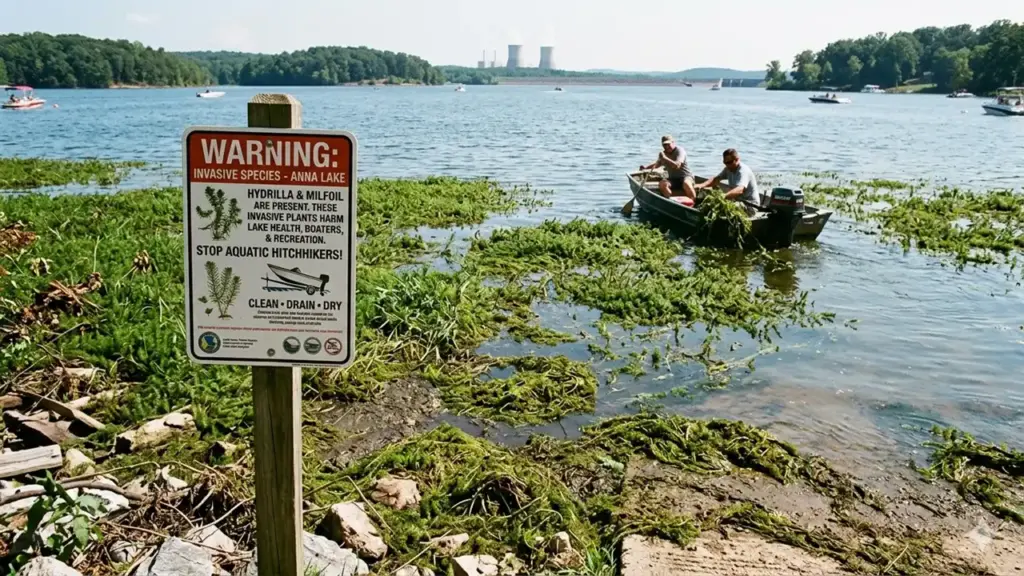
Clean, Drain, and Dry
The number one vector for invasive spread is recreational boating. Always follow these three steps when moving your boat between water bodies:
- Clean: Remove all visible mud, plants, and animals from your boat and trailer.
- Drain: Empty your live wells, bilge, and bait buckets before leaving the ramp.
- Dry: Allow your boat and gear to dry for at least five days (or use a high-pressure hot water wash).
Myadp Login & New Register My.Adp.Com
Responsible Landscaping
If you live on the shoreline, consider reducing the use of fertilizers. Runoff from lakefront properties is a major contributor to the nutrient levels that allow Anna Lake invasive species to thrive. Planting a “buffer zone” of native Virginia shrubs can help filter runoff before it hits the water.
FAQ: Frequently Asked Questions
1. Is it safe to swim in areas with Hydrilla?
While Hydrilla itself isn’t toxic, the dense mats can be dangerous for swimmers due to the risk of entanglement. Additionally, these mats can sometimes trap stagnant water where harmful bacteria or algae may thrive. It is best to stick to cleared, managed swimming areas.
2. Can I pull the weeds out myself?
No. Mechanical removal like raking is highly discouraged. Hydrilla reproduces through fragmentation—if you break a piece off and let it float away, it can take root elsewhere and start a new colony. Always report sightings to the LAAC instead.
3. How do I report a new invasive species sighting?
You can contact the LAAC Environmental Subcommittee or use official reporting apps like EDDMapS. Taking a clear photo and noting the exact GPS location or cove name is incredibly helpful for the rapid response team.
4. Will the grass carp eat all the native plants too?
Biologists carefully calculate the number of carp stocked to ensure they target the invasive Hydrilla without decimating native “good” weeds like Southern Naiad. Because the carp used are sterile, their population is easily controlled.
Protecting the Future of Lake Anna
The presence of Anna Lake invasive species is a significant challenge, but it is one that the community is meeting head-on. By combining biological controls, modern herbicide technology, and diligent public participation, we can ensure that Lake Anna remains a vibrant destination for generations to come.


