


A significant food safety alert has been issued regarding the King Cheesecake recall, causing concern for dessert lovers across several regions.
If you have recently purchased a cheesecake from the King Cheesecake Company or related bakery brands, it is vital to check your refrigerator immediately. This recall was initiated due to potential health risks that could affect your family’s safety.
In this guide, we will break down exactly why the King Cheesecake recall happened, which specific products are affected, and the steps you should take to get a full refund while protecting your health.
Why Was the King Cheesecake Recall Issued?
The King Cheesecake recall was primarily triggered after routine quality control testing discovered the potential presence of Salmonella and Listeria monocytogenes in certain batches. Additionally, some products were found to contain undeclared allergens, specifically pecans and hazelnuts, which were not listed on the original packaging.
Food safety authorities, including the FDA and local health departments, have classified this as a Class I recall. This is the most serious category, reserved for situations where there is a reasonable probability that eating the product will cause serious health consequences.
Understanding the Risks: Salmonella and Listeria
The main concern behind the King Cheesecake recall is bacterial contamination.
- Salmonella: Can cause fever, diarrhea, and abdominal cramps. While most healthy people recover, it can be dangerous for young children and the elderly.
- Listeria: This is particularly risky for pregnant women, as it can lead to severe complications. Symptoms often include muscle aches, stiff neck, and confusion.
List of Affected Products in the King Cheesecake Recall
Not every item from the bakery is part of the King Cheesecake recall. The focus is on specific batches produced between late 2025 and early 2026. Below are the most common products currently under investigation:
| Product Name | Packaging Size | Batch Codes / Best Before Dates |
| Italian Layer Cake | 24 oz. | All dates through APR-10-26 |
| New York Style Cheesecake | 8 oz. & 32 oz. | Lot #25028A1 |
| Tres Leches Cheesecake | Single Slice | Best By MAR-15-26 |
| Hummingbird Cake (Pecan risk) | 16 oz. | All batches sold in March 2026 |
| Chocolate Blonde Cheesecake | 2-pack (82g) | Batch Code 226044 |
If you possess any of these items, do not open or consume them. Even if the cake looks and smells perfectly fine, the bacteria responsible for the King Cheesecake recall are microscopic and cannot be detected by sight or smell.
Areas and Stores Impacted by the Recall
The King Cheesecake recall has affected several major retailers and distribution centers. While the company is based in the South, the supply chain reaches across the country. Reports indicate that affected cheesecakes were sold at:
- Walmart (Specific locations in Texas, Georgia, and California)
- Target (Select Favorite Day Gourmet varieties)
- Aldi (Cream cheese spreads and specialty dessert cakes)
- Whole Foods (Specifically the “King Cakes” sold in the bakery section)
If you live in , local health inspectors have already begun visiting retail sites to ensure all contaminated stock has been removed from the shelves. However, because these products have a long shelf life, many may still be in consumer home freezers.
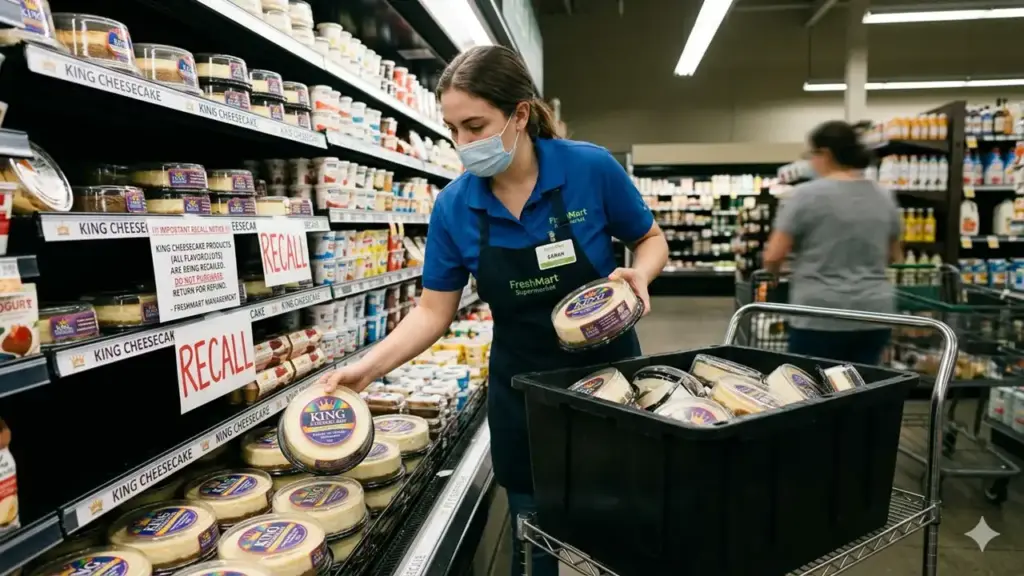
What to Do if You Bought a Recalled Cheesecake
If you realize you have a product listed in the King Cheesecake recall, follow these safety protocols immediately:
- Stop Consumption: Do not “test” the cake or feed it to pets.
- Seal the Product: Place the cheesecake in a sealed plastic bag before throwing it away to prevent cross-contamination in your kitchen.
- Return for a Refund: Most retailers, including Walmart and Target, are offering full refunds for the King Cheesecake recall items. You usually do not need a receipt—simply bring the packaging or the product back to the customer service desk.
- Sanitize Your Kitchen: If the recalled item sat on your counter or in your fridge without a lid, wipe down the surfaces with a mild bleach solution or a food-safe sanitizer to kill any lingering bacteria.
Frequently Asked Questions (FAQ)
1. Has anyone gotten sick from the King Cheesecake recall?
As of March 2026, there have been a handful of reported cases of mild digestive upset, but no major hospitalizations have been officially linked to this specific batch. However, the King Cheesecake recall was issued as a preventive measure to stop a wider outbreak.
2. Can I still eat the cheesecake if I bake it longer?
No. While heat can kill some bacteria, many toxins produced by bacteria are heat-resistant. Furthermore, baking will not remove undeclared allergens like pecans. It is safest to follow the King Cheesecake recall guidelines and discard the product.
3. How do I identify the batch code?
Batch codes are typically printed on the side of the plastic “clamshell” container or on the bottom of the cardboard box. Look for a string of numbers near the “Best By” date to see if it matches the King Cheesecake recall list.
Final
The King Cheesecake recall serves as a vital reminder of how seriously food safety is taken by both manufacturers and regulators. While it is disappointing to lose a favorite dessert, your health is the top priority. By staying informed and checking your pantry for the affected lot codes, you can protect yourself and your loved ones from potential foodborne illness.


