


When you board a long-haul flight, you expect a routine journey from point A to point B. However, aviation is built on a foundation of “safety first,” which sometimes means the plan has to change mid-air. Recently, United Airlines flight UA770 emergency diversion became a topic of significant interest after the aircraft was forced to land ahead of its scheduled destination.
In this comprehensive guide, we will break down exactly what happened during the UA770 diversion, the technical reasons behind such decisions, and what passengers can expect when a flight “squawks 7700.”
How To Pass.bsafe.kerala.gov.in Login
What Led to the United Airlines Flight UA770 Emergency Diversion?
The incident involving United Airlines flight UA770 primarily centered around a technical irregularity that required immediate professional assessment. While flying at its cruising altitude, the flight crew identified a potential issue that necessitated a precautionary landing.
The Route and the Aircraft
Flight UA770 is a notable route in the United network, frequently operating between Barcelona (BCN) and Chicago O’Hare (ORD). On the day of the diversion, the aircraft—typically a high-capacity Boeing 787-9 Dreamliner—was carrying a full load of passengers across the Atlantic.
Navaratnalu House Sites Ap gov in Login
The Technical Trigger: Cabin Pressurization
The primary reason cited for the United Airlines flight UA770 emergency diversion was a suspected issue with the cabin pressurization system. In modern aviation, the Dreamliner uses advanced sensors to monitor the air pressure that keeps the cabin environment safe for humans at 37,000 feet.
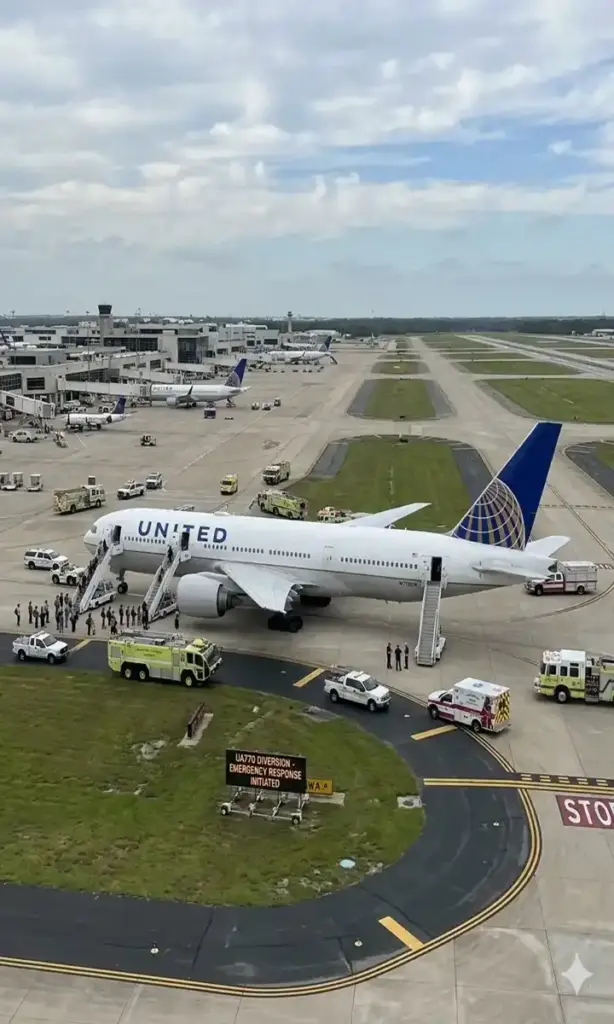
Even if the pressure remains within safe limits, any “indication” of a fault is treated with the utmost seriousness. In the case of UA770, the pilots opted to descend and divert rather than risk a more severe decompression event over the open ocean.
How To Cgteeka Cgstate gov .in Login
Understanding the “Squawk 7700” Emergency Code
When the news of a diversion breaks, you will often hear the term “Squawk 7700.” This is not just pilot slang; it is a critical communication tool.
What is Squawk 7700?
A transponder code of 7700 tells all Air Traffic Control (ATC) units in the vicinity that the aircraft has an emergency. By setting this code, the crew of UA770 ensured they had:
- Priority Routing: ATC clears the path for the aircraft, moving other planes out of the way.
- Emergency Services Readiness: Ground crews, including fire trucks and medical teams, are stationed at the runway as a precaution.
- Constant Monitoring: Specialized controllers keep a dedicated eye on the flight’s telemetry.
For UA770, the use of this code was a textbook example of proactive safety management. It allowed the pilots to focus on flying the plane while the ground infrastructure prepared for their arrival.
The Diversion to London Heathrow (LHR)
While the flight was bound for the United States, the decision was made to divert to London Heathrow Airport. For many passengers, this can be a confusing moment, but the logic is rooted in logistics and safety.
Why Heathrow?
London Heathrow is one of the world’s premier “emergency friendly” airports. It offers:
- Long Runways: Ideal for aircraft that may need to land at higher speeds due to technical configurations.
- Maintenance Hubs: United Airlines has a significant presence at LHR, meaning spare parts and specialized mechanics are readily available.
- Passenger Care: Large airports can better accommodate 200+ passengers with hotel vouchers, rebooking desks, and food services.
The Landing Experience
Witnesses and flight tracking data showed that UA770 landed safely on Runway 27R. Despite the “emergency” status, the landing was described as smooth, and emergency vehicles—while present—were not required to intervene. This outcome is a testament to the crew’s training and the aircraft’s redundant safety systems.
Passenger Safety and Airline Protocols
If you find yourself on a diverted flight like UA770, it is helpful to understand the “behind-the-scenes” process that ensures your wellbeing.
No Oxygen Masks?
A common point of confusion during the United Airlines flight UA770 emergency diversion was why the oxygen masks did not drop. Oxygen masks are designed to deploy automatically only if the cabin pressure drops below a specific threshold (usually 14,000 feet cabin altitude).
Because the pilots of UA770 identified the problem before a loss of pressure occurred, they were able to descend to a lower altitude where the air is naturally breathable. This is the hallmark of a “controlled diversion“—managing the risk before it becomes a crisis.
Post-Landing Support
After the aircraft touched down in London, United Airlines initiated its standard recovery protocol:
- Technical Inspection: The Boeing 787 was taken to a hangar for a full diagnostic of the pressurization valves.
- Passenger Rebooking: Passengers were placed on subsequent flights to Chicago or provided overnight accommodation.
- Crew Debrief: The flight crew provided detailed reports to the FAA and NTSB to help improve future safety standards.
How Airlines Prevent Future Incidents
The United Airlines flight UA770 emergency diversion is more than just a headline; it is a data point for the entire industry.
Every time a Dreamliner or any commercial jet diverts, the “why” is analyzed by Boeing and United’s engineering teams.
- Predictive Maintenance: Using data from UA770, airlines can update their software to recognize the early “fingerprints” of a system failure before the flight even takes off.
- Training Refinement: Simulator sessions for pilots often include scenarios based on real-world diversions like this one to ensure crews remain the best-trained in the sky.
FAQ: Common Questions About Flight UA770
1. Was anyone injured during the UA770 diversion?
No. All passengers and crew members landed safely at London Heathrow, and no medical emergencies were reported as a result of the technical issue.
2. Is the Boeing 787-9 Dreamliner safe to fly?
Yes. The Dreamliner is considered one of the most advanced and safe aircraft in operation. Diversions for technical “indications” are a standard part of maintaining that high safety record.
3. Will I get a refund if my United flight is diverted?
Typically, airlines do not offer full refunds for weather or safety-related diversions, as the priority is getting you to your destination safely. However, United often provides vouchers, meals, or hotel stays depending on the length of the delay.
4. How often do emergency diversions happen?
While they seem scary, diversions happen daily across the globe. Most are due to medical emergencies on board or minor technical “cautions” that pilots choose to investigate on the ground rather than in the air.
Safety Over Schedule
The United Airlines flight UA770 emergency diversion serves as a powerful reminder that in modern aviation, “safety over schedule” is the golden rule.
While a diversion is an inconvenience for travelers, it represents a system that is working exactly as intended: identifying potential risks and addressing them on the ground.


