


This was the reality for passengers during the recent United Flight 1270 emergency. While any mid-air incident can feel alarming, the way this situation was handled provides a masterclass in modern aviation safety and pilot professionalism.
In this comprehensive guide, we’ll break down exactly what happened, why the aircraft diverted, and what it means for your future travel plans in 2026.
What Happened During the United Flight 1270 Emergency?
The incident began as a routine morning departure. United Airlines Flight 1270, operated by a Boeing 737-900ER, took off from Chicago O’Hare International Airport (ORD) bound for Punta Cana (PUJ).
Approximately two hours into the flight, while cruising over the Atlantic corridor near the North Carolina coast, the flight crew detected a mechanical anomaly.
The pilots quickly made the decision to “squawk 7700“—the international transponder code for a general emergency.
This signal alerts air traffic control that the aircraft requires priority handling and a clear path to the nearest suitable airport. In the case of the united flight 1270 emergency, that airport was Newark Liberty International (EWR).
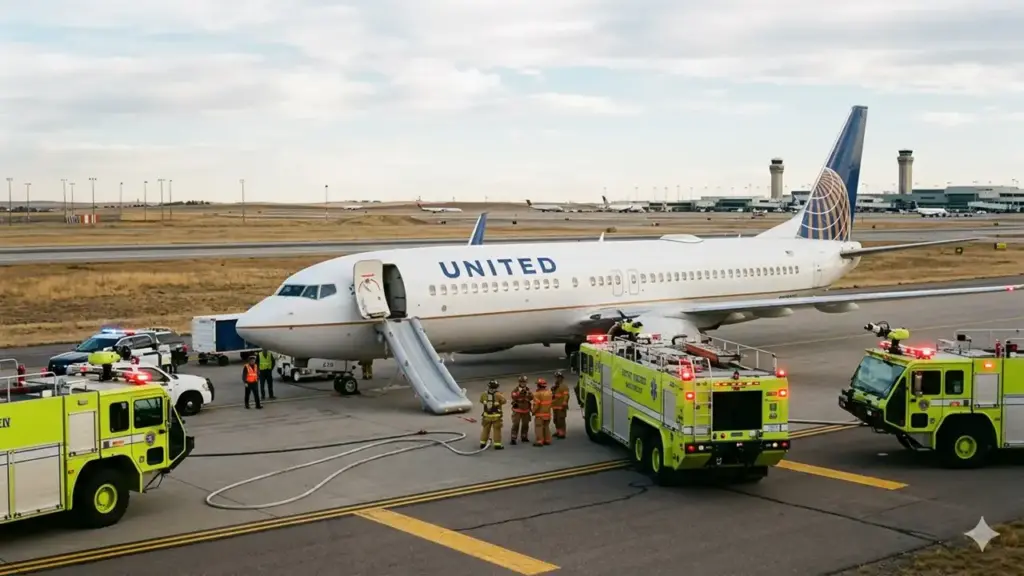
United Airlines Flight UA82 Emergency
Key Details of the Incident:
- Aircraft Type: Boeing 737-900ER
- Origin: Chicago O’Hare (ORD)
- Planned Destination: Punta Cana (PUJ)
- Diversion Point: Newark Liberty International (EWR)
- Emergency Code: Squawk 7700
The Cause: Mechanical Issues and Safety Protocols
While United Airlines and the FAA continue their standard investigations, early reports from aviation insiders and tracking data suggest the united flight 1270 emergency was triggered by a failure in the aircraft’s anti-icing system.
In the upper atmosphere, even during summer months, temperatures can drop well below freezing. An anti-icing system is critical for preventing ice buildup on the wings and engine inlets, which can disrupt airflow and lift. When this system fails, the aircraft can no longer safely fly through “known icing conditions.”
Erespassrider Login: United Airlines Employee Travel Portal Guide
Rather than “pushing through” and risking safety, the crew followed their training to the letter: they descended to a lower, warmer altitude (approximately 10,000 feet) and headed for a major maintenance hub. Newark was chosen specifically because it is one of United’s largest bases, offering immediate access to specialized repair hangars and replacement aircraft.
Passenger Experience: Calm Over Chaos
Despite the “emergency” label, the atmosphere inside the cabin during the united flight 1270 emergency was described by passengers as remarkably calm. According to first-hand accounts shared on social media and aviation forums like r/fearofflying, the cabin crew played a pivotal role in maintaining order.
“The announcement was professional. No panic—just a clear explanation that we were diverting for a mechanical issue. We stayed at a lower altitude where it was warmer, and the landing in Newark was as smooth as any other,” noted one traveler.
United’s ground response was equally efficient. Once the plane landed safely on Runway 22R at Newark, passengers were met by ground staff. Because Newark is a primary hub, United was able to facilitate a “plane swap,” getting most travelers back in the air and on their way to the Dominican Republic within four hours.
What Happened During the United Flight UA967 Diverted Incident
Is it Safe to Fly United in 2026?
Following the united flight 1270 emergency, some travelers have expressed concerns about fleet maintenance. It is important to put these events into perspective. The Boeing 737-900ER is a workhorse of the industry with a stellar safety record.
Aviation experts point out that an increase in reported “emergencies” often reflects a tightening of safety culture rather than a decline in maintenance.
In 2026, pilots are more likely than ever to divert early at the first sign of a sensor discrepancy, prioritizing the “better safe than sorry” approach that keeps modern commercial flight the safest mode of transportation in the world.
Safety Lessons for Travelers:
- Understand “Squawk 7700”: It doesn’t mean the plane is falling; it means the pilot wants the “HOV lane” to get on the ground quickly for an inspection.
- Keep Your Seatbelt Fastened: During the united flight 1270 emergency, the quick descent meant passengers needed to be secure. Always keep your belt buckled even when the sign is off.
- Trust the Hub System: Flying through major hubs (like Newark or Chicago) provides a safety net of parts, mechanics, and extra planes.
Frequently Asked Questions (FAQ)
Was anyone injured in the United flight 1270 emergency?
No. There were zero reported injuries among the passengers and crew. The aircraft made a controlled, conventional landing at Newark Liberty International Airport.
What should I do if my flight declares an emergency?
Remain calm and follow all instructions from the cabin crew. Keep your seatbelt fastened and clear the aisles. Most diversions, like the united flight 1270 emergency, are precautionary measures.
Will United provide compensation for the delay?
In cases of mechanical diversions, airlines typically provide meal vouchers and, if the delay is overnight, hotel accommodations. For the Flight 1270 incident, most passengers were rebooked on a replacement flight the same afternoon.
How common are emergency diversions?
Statistically, they are extremely rare, occurring in less than 1% of all commercial flights. They are a sign that the safety systems and pilot protocols are working as intended.
Conclusion: Safety Above All
The united flight 1270 emergency serves as a powerful reminder of why air travel remains so safe. From the moment the mechanical anomaly was detected, a massive network of safety protocols—from the cockpit to air traffic control to ground maintenance—kicked into gear to ensure every passenger arrived at their destination safely.


